
Personal Trainer for Seniors Over 60 at Home Safe Strength and Balance Training

Strength, balance and confidence often decide whether daily life feels easy or tiring after 60. Carrying groceries, getting out of a low chair, stepping over a garden hose, or walking on uneven footpaths all rely on muscles and balance systems that need regular practice.
A personal trainer for seniors over 60 at home makes that practice easier to keep up. There is no commute, no crowded gym floor, and no need to learn unfamiliar machines. The session happens in a familiar space, using the body, simple equipment, and movements that relate to real life.
This type of service suits older adults who want safe, supervised exercise at home. It is not a replacement for acute medical care, hospital follow-up, or rehabilitation straight after surgery. Anyone with a new diagnosis, chest pain, unexplained dizziness, or a recent fall should speak with a GP or treating health professional before starting.

Why in-home fitness can work better than the gym
Many older adults do not avoid exercise because they dislike movement. They avoid settings that make movement harder to start.
Driving to a gym, finding parking, walking through a busy reception area, and working out near unfamiliar equipment can drain energy before the session begins. Joint pain, fatigue, hearing difficulties, or worries about falling can make the process even more stressful.
At home, those barriers shrink. The trainer can see the exact environment where daily movement happens, such as:
The chair used most often
The step near the back door
The hallway used for walking practice
The garden path that feels uneven
The bench used for support during exercises
That matters because exercise becomes more practical. A balance drill near the kitchen bench can directly support safer movement around the kitchen. A sit-to-stand drill from a favourite chair can make getting up easier during the day.
The World Health Organization recommends that older adults include strength, balance and varied movement as part of regular physical activity. The same guidance also recognises that activity should match a person’s ability and health status. Home training fits that principle well because the session can be adjusted on the spot.
What safe strength training looks like after 60
Safe strength training for seniors does not need heavy weights or complex machines. It needs controlled movement, good coaching, rest when needed, and gradual progress.
A qualified mobile trainer will usually begin by checking movement basics, such as how someone stands from a chair, steps sideways, reaches overhead, or walks while turning. These simple actions reveal a lot about strength, balance and confidence.
Common home-based strength exercises may include:
Sit-to-stand practice Builds leg strength for chairs, toilets and car seats.
Wall push-ups Strengthens the chest, shoulders and arms without getting down on the floor.
Heel raises Supports calf strength, walking and stair control.
Step-ups on a low step Helps with stairs, kerbs and uneven ground.
Carrying light objects Builds useful strength for shopping bags, laundry baskets and gardening tasks.
Progress might mean doing one extra repetition, using a slightly lower chair, slowing the movement down, or improving posture. It should not mean pushing through sharp pain or ignoring warning signs.
Balance training should feel controlled, not risky
Falls are a major concern for many people over 60, and for good reason. Health authorities in Australia consistently identify falls as a leading cause of injury among older adults. Balance training can help, but it must be done carefully.
Good balance work starts with support nearby. That may be a kitchen bench, a sturdy chair, or the trainer standing close enough to assist. The aim is to challenge balance without creating fear.
A session may include:
Standing with feet closer together
Shifting weight from one foot to the other
Gentle heel-to-toe walking near support
Stepping in different directions
Turning slowly and with control
Practising how to recover from a small wobble
The trainer watches for signs of fatigue, breathlessness, dizziness or overconfidence. Just as important, they help rebuild trust in movement. Many people move less after a near fall. Less movement can then reduce strength, making balance worse over time. Careful practice helps break that cycle.
Consistency matters more than intensity. A smaller routine done regularly is usually more useful than a hard session that leaves someone sore for days.
How a home session is usually structured
A good senior training session should feel calm, purposeful and easy to understand. It should not feel rushed.
Most sessions follow a simple pattern.
Gentle warm-up
Strength work
Balance practice
Mobility work
Cool-down
Easy walking, joint movement and breathing to prepare the body.
Chair-based, standing or light equipment exercises matched to ability.
Supported drills that improve control and confidence.
Gentle movement for hips, shoulders, ankles and spine.
Slower movement and a short check-in about how the body feels.
The trainer may also suggest simple practice between visits. That could be standing from a chair a few times during the day, doing heel raises at the bench, or taking short walks when energy is best.
Fitness Inside Out provides qualified mobile trainers across Greater Sydney, the Central Coast NSW, Illawarra NSW, Greater Melbourne and Brisbane. For many older adults, that local home-based model makes exercise easier to maintain through heat, rain, traffic and busy family schedules.

Who benefits most from supervised home training
Home training can suit many people over 60, including those who:
Feel uncomfortable in gyms
Have lost strength after a less active period
Want better balance for walking and stairs
Prefer private coaching
Need exercises adjusted for sore knees, hips or shoulders
Want a routine that fits around real daily life
Feel unsure how hard to exercise safely
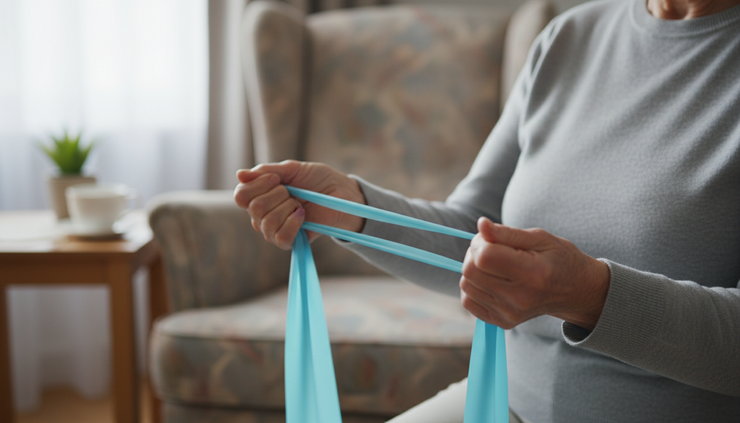
It can also help people who have basic equipment at home but do not know how to use it well. A trainer can build a program around a chair, resistance band, light hand weights, a step, or open floor space.
The key is matching the work to the person. Two people of the same age may need very different sessions. One may be working towards longer beach walks. Another may want to stand up from a chair without using both arms. Both goals are valid, and both can be trained.
What to check before starting
Before booking, it helps to ask a few practical questions.
Does the trainer have experience working with older adults?
Can they adjust exercises for pain, arthritis or balance concerns?
Will they ask about health history and current medications?
Do they know when to stop a session and recommend medical advice?
Can the program be done safely in the available space?
A sensible trainer will welcome these questions. They should also encourage medical clearance when health risks are unclear.

The real goal is independence
The best exercise program after 60 is one that can be repeated safely. Home training supports that by removing travel, reducing intimidation, and making each session relevant to daily life.
Safe strength and balance work helps protect the skills that matter most, standing, walking, reaching, carrying and recovering from small slips. With the right trainer, the home becomes a practical training space for staying capable, steady and confident.


Comments