
In-Home Personal Training vs Online Coaching: Which Is Better?

When comparing in-home personal training vs online coaching, the main difference is the trainer’s physical presence.
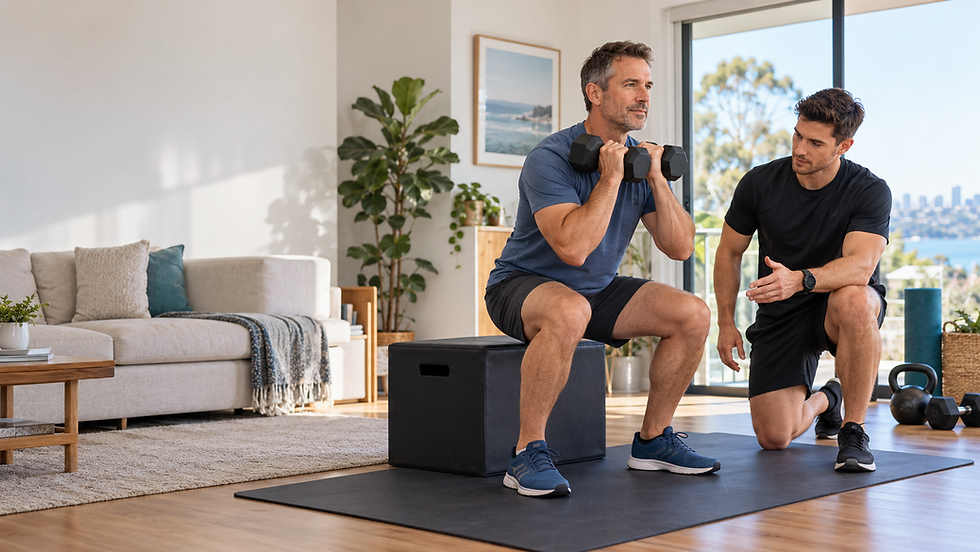
An in-home trainer attends the session, observes your movement in real time and adjusts the workout immediately. An online coach provides training remotely through an application, video calls, messages or recorded exercise feedback.
Neither option is universally better. Your experience, confidence, schedule, budget and need for supervision should determine the choice.
What Is In-Home Personal Training?
In-home personal training involves a coach travelling to your home, apartment gym, workplace or another agreed location.
The trainer may bring portable equipment and deliver the entire session in person.
A typical service can include:
Initial consultation and screening
Individual assessment
Personalised programming
Real-time exercise instruction
Immediate technique feedback
Equipment supplied by the trainer
Progress tracking
Regular scheduled appointments
The primary advantages are direct supervision, privacy, accountability and eliminating the journey to a gym.
What Is Online Coaching?
Online coaching is delivered remotely.
Depending on the provider, it may include:
An exercise program delivered through an application
Recorded exercise demonstrations
Weekly or monthly check-ins
Video review of exercise technique
Live video-call sessions
Messaging support
Progress tracking
Training completed on your own schedule
Online coaching ranges from highly personalised professional support to generic programs sold to hundreds of people. Confirm exactly what is included before paying.
Real-Time Exercise Feedback
In-home personal training provides the strongest opportunity for immediate observation.
The trainer can see your entire position, the available environment and how you respond as fatigue develops. They can change the exercise, resistance or coaching cue immediately.
Online coaching may still provide technique feedback through live calls or recorded videos. However, camera position, video quality and limited viewing angles can restrict what the coach sees.
For experienced clients, that may be manageable. Beginners may benefit more from having the coach physically present.
Accountability
A scheduled in-home appointment creates direct accountability. Ignoring the session becomes difficult when the trainer arrives at the agreed location.
Online coaching offers a different form of accountability through messages, program tracking and check-ins.
It can work extremely well for someone who already trains independently. It is easier to neglect when motivation is low or the program competes with a busy schedule.
Ask yourself honestly whether flexibility helps you train or simply makes postponing the session easier.
Scheduling and Flexibility
Online coaching usually offers greater flexibility because the workout can often be completed at any time and in any location.
This may suit:
Frequent travellers
Shift workers
Experienced gym users
People outside a trainer’s service area
Clients with unpredictable schedules
In-home personal training requires a recurring appointment and access to the agreed location.
The trade-off is that the scheduled appointment may protect the training time more effectively than an entirely flexible program.
Equipment
An online coach must design the program around the equipment you own or the gym you independently attend.
An in-home trainer may bring portable equipment and incorporate what is already available in your home or apartment gym.
Neither option can reproduce every specialised machine or heavy loading arrangement. The trainer should be honest when your goals require equipment that is unavailable.
Cost
Online coaching is often less expensive because the trainer does not need to travel or spend every training hour physically present.
In-home personal training generally costs more because it includes:
The trainer’s scheduled time
Travel
Equipment transport
In-person observation
Immediate adjustment
Greater appointment accountability
Compare the actual service rather than the monthly figure alone.
A cheap online template with minimal contact is not equivalent to personalised online coaching. Similarly, an expensive in-person session is not automatically high quality.
Privacy
Both formats can provide greater privacy than a busy commercial gym.
In-home personal training still requires allowing a professional into your home or private facility.
Online coaching can be completed privately, but submitting exercise videos or health information creates digital privacy considerations. Ask how videos, messages and personal information are stored.
Who May Prefer In-Home Personal Training?
In-home coaching may be more suitable if you:
Are new to strength training
Want real-time instruction
Lack confidence exercising alone
Prefer a fixed appointment
Value privacy
Want the trainer to bring equipment
Need the session adjusted immediately
Find travelling to a gym creates a barrier
Who May Prefer Online Coaching?
Online coaching may be more suitable if you:
Already understand fundamental exercise technique
Train independently and consistently
Travel frequently
Live outside the trainer’s service area
Want greater scheduling flexibility
Have access to suitable equipment
Prefer a lower-cost service
Are comfortable recording exercises for feedback
Could a Hybrid Approach Work?
Yes.
Some people begin with in-person sessions to learn exercises and establish confidence, then complete additional workouts independently.
Another option is one coached in-home session each week combined with a separate program completed alone.
A hybrid structure can provide direct supervision while retaining some flexibility. It still needs clear responsibilities and realistic expectations.
Questions to Ask Before Choosing
Ask either provider:
What qualifications do you hold?
How is my starting point assessed?
How personalised is the program?
How often is the program reviewed?
How is technique evaluated?
What support is included?
What equipment will I need?
How are results measured?
What are the cancellation or refund conditions?
How is my personal information handled?
The delivery format matters, but the quality of the coaching matters more.
Evidence Based Motion’s Approach
Evidence Based Motion specialises in face-to-face mobile personal training across selected Sydney service areas.
Sessions can be delivered at homes, apartment gyms, workplaces and suitable outdoor locations. The coach brings equipment, provides real-time instruction and adjusts training around the client’s goals, ability and environment.
Evidence Based Motion does not pretend that in-home coaching is the best option for everyone. Clients who already train confidently, travel constantly or primarily want a lower-cost program may prefer online coaching.
For clients who value direct supervision, privacy and accountability, mobile personal training provides a higher level of in-person support.
Learn how mobile personal training works, check the Sydney service areas, or apply for coaching.
Frequently Asked Questions
Is online coaching effective?
It can be, particularly for self-directed clients who already understand basic exercise technique and follow their program consistently.
Is in-home personal training better for beginners?
Beginners may benefit from immediate feedback and direct supervision, but the coach’s qualifications and communication still matter.
Is online coaching always cheaper?
It is commonly cheaper, but prices and service levels vary. Compare contact time, program reviews and support rather than price alone.
Do I need equipment for online coaching?
The coach should design the program around the equipment available to you. Confirm requirements before enrolling.


Comments