
Returning to Exercise After a Long Break: A Practical Sydney Guide
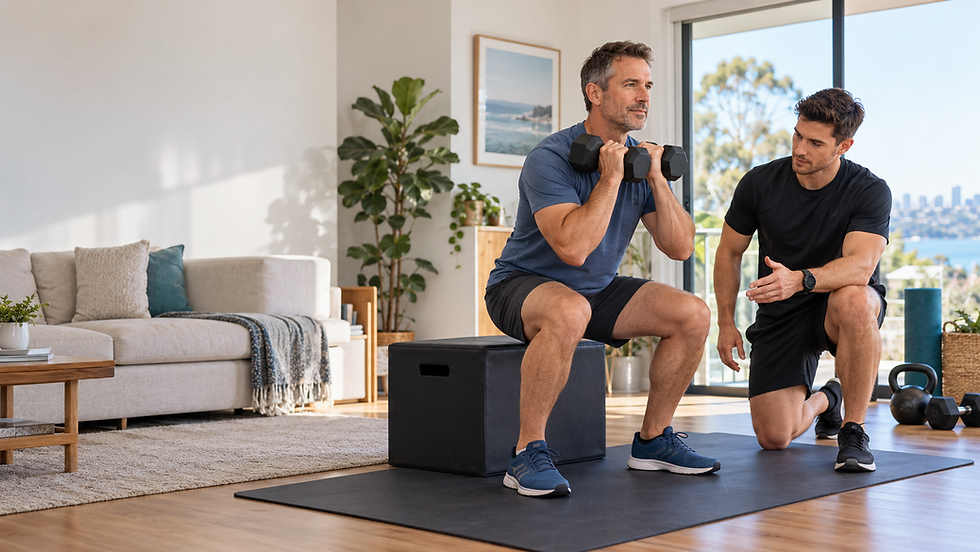
When returning to exercise after a long break, begin from your current capacity—not the fitness level you remember.
Choose manageable sessions, rebuild your technique and establish consistency before increasing the difficulty. If your break followed an injury, illness, operation or significant health change, seek appropriate professional advice before resuming.
The first goal is not a rapid transformation. It is creating a routine you can repeat.
Accept That Your Starting Point Has Changed
Strength, fitness, confidence and tolerance for exercise can decline during months or years away.
That is normal.
Testing your old limits during the first week is more likely to produce excessive soreness or a setback than meaningful progress.
Your previous exercise experience still has value. Familiar movements and training habits may return, but that does not remove the need for a gradual rebuild.
Start with what you can perform well today.
Understand Why You Stopped
Before choosing another program, identify what interrupted the previous one.
Common reasons include:
An unrealistic schedule
Injury or illness
Work travel
Caring responsibilities
Discomfort in busy gyms
Doing too much too quickly
Training that felt boring or intimidating
A plan that relied entirely on motivation
No clear way to measure progress
If the underlying barrier remains unchanged, recreating the same plan will probably produce the same outcome.
Your new approach should address the reason you stopped—not merely give you a different collection of exercises.
Screen Health and Injury Changes
Complete appropriate pre-exercise screening and disclose anything that changed during the break.
This may include:
New medication
Surgery
Diagnosed health conditions
Chest discomfort
Unexplained dizziness or fainting
Unusual shortness of breath
Recent falls
New or worsening pain
Significant changes in blood pressure or blood glucose
The Australian Adult Pre-Exercise Screening System helps identify people who may require further advice before beginning or progressing an exercise program.
Screening does not diagnose medical conditions, but it should not be skipped.
Start Below Your Maximum
Early sessions should leave room for improvement.
Use loads and durations you can control, finish repetitions with sound technique and observe how your body responds during the following day or two.
The appropriate starting point is individual.
Someone returning after six weeks away from a familiar program is different from someone returning after five inactive years.
You do not need to finish the first session exhausted for it to be useful.
Build Frequency Before Chasing Intensity
A manageable session completed consistently is more valuable than one punishing workout followed by ten days of avoidance.
Establish:
Which days you will train
What time is realistically available
Where training will happen
How long each session will last
What you will do during busy weeks
How you will respond if you miss an appointment
Once that routine becomes reliable, gradually increase the exercise difficulty.
Australian movement recommendations encourage adults to be active most days and undertake muscle-strengthening activities on at least two days each week.
You can build towards those recommendations. You do not need to meet every target during your first week back.
Expect Some Discomfort, Not Dysfunction
Mild muscle soreness can occur after unfamiliar exercise.
Severe soreness that disrupts your ability to walk, work or sleep is not necessary for progress.
Report symptoms such as:
Sharp or worsening pain
Dizziness or faintness
Unusual breathlessness
Chest discomfort
Significant swelling
Loss of normal function
A response that feels abnormal for you
Do not allow fear of ordinary muscle soreness to prevent all activity. Equally, do not treat every warning sign as weakness.
Make Exercise Easier to Attend
Sydney traffic, parking and busy schedules can turn a simple workout into a major logistical commitment.
Reduce the number of steps between intending to exercise and actually beginning.
This may involve:
Preparing your clothing in advance
Training before the workday becomes unpredictable
Using your apartment gym
Training at home
Choosing a nearby outdoor location
Booking a recurring appointment
Keeping a shorter backup session available
Mobile personal training may help when commuting, gym confidence or accountability has been the main barrier.
It is not essential for everyone. The best environment is the one you can use consistently.
Track the Right Early Progress
During the first month, useful progress may include:
Completing your planned sessions
Moving with better control
Recovering more predictably
Feeling less anxious about exercising
Improving exercise technique
Gradually increasing resistance or duration
Returning to everyday activities with more confidence
Do not let daily body-weight fluctuations decide whether the program is working.
Consistency and improved capacity are more useful early indicators.
When Professional Coaching May Help
Professional coaching may be useful when you:
Do not know where to begin
Repeatedly do too much during the first week
Lack confidence with exercise technique
Have a previous injury requiring sensible modifications
Need accountability
Want training brought to your home or apartment gym
Struggle to build exercise around a demanding schedule
Ask the trainer about their qualifications, screening process, professional scope and approach to gradual progression.
Avoid anyone promising instant transformation or attempting to punish you for the time you spent away.
Returning With Evidence Based Motion
Evidence Based Motion provides personalised mobile coaching across selected Sydney areas.
Each client begins with an individual consultation and assessment. Training is then designed around current ability, exercise history, goals, available equipment and the environment in which sessions will occur.
The objective is not to recreate your previous fitness immediately. It is to establish a clear starting point and build sustainable progress over time.
Learn how mobile personal training works, explore mobile strength training in Sydney, or apply for coaching.
Frequently Asked Questions
How quickly should I return to my previous training level?
There is no universal timeline. It depends on the duration and reason for your break, health, previous experience and response to the new workload.
Should I exercise when I am sore?
Mild muscle soreness may be manageable. Significant, worsening or unusual symptoms should be reported and the session adjusted.
Do I need a personal trainer to restart?
No. Many people can restart independently with a sensible gradual plan. Professional coaching can provide structure, technique guidance, individualisation and accountability.
How many times per week should I begin?
The correct frequency depends on your current capacity and total activity. Choose a schedule you can recover from and maintain consistently.


Comments