
Mobile Personal Training vs Gym Personal Training Which Suits You
Neither format is universally better. Mobile personal training suits people who value privacy, convenience, and training in their own space. Gym personal training suits people who want more equipment or like the energy of a gym. The right choice depends on your health needs, schedule, budget, space, and what helps you train consistently.

Who this is for
This guide is for anyone weighing up mobile personal training vs gym personal training before choosing a provider.
It is most relevant if exercise is part of a broader health, strength, pain, mobility, or fitness plan. That might include returning after a break, managing old injuries, building strength with more structure, or finding a way to train that fits real life.
It is not the right fit if you need urgent medical care, a diagnosis, or treatment for severe or worsening symptoms. In those cases, speak with a GP, physiotherapist, exercise physiologist, or other qualified health professional.
It is also not about which option is more “serious”. Good coaching can happen in both settings. Poor coaching can also happen in both. The setting matters, but it is only one part of the decision.
Decision factors to weigh up
The best choice is the one that supports safe, steady training over time. Use these points to compare both options.
Convenience and time
Mobile personal training removes travel. That can matter if work hours are tight, caring duties are high, or getting to a gym creates friction.
Gym personal training can still be convenient if the gym is close to home or work. It may also help create a clear routine. Some people train better when they leave the house and enter a dedicated training space.
Ask one simple question. Which option will still work on a busy week?
Privacy and comfort
Home training can suit people who feel self-conscious in gyms, prefer a quieter space, or want fewer distractions. It can also be useful when exercise is being used as a management strategy for pain, confidence, or movement concerns.
A gym can suit people who enjoy being around others. Some people find the environment motivating. The shared setting can help separate training from work, chores, and family demands.
Neither response is wrong. Comfort affects consistency.

Equipment and training options
Gyms usually provide more equipment. This can help if the plan needs heavier strength work, cable machines, benches, or a wider range of loading options.
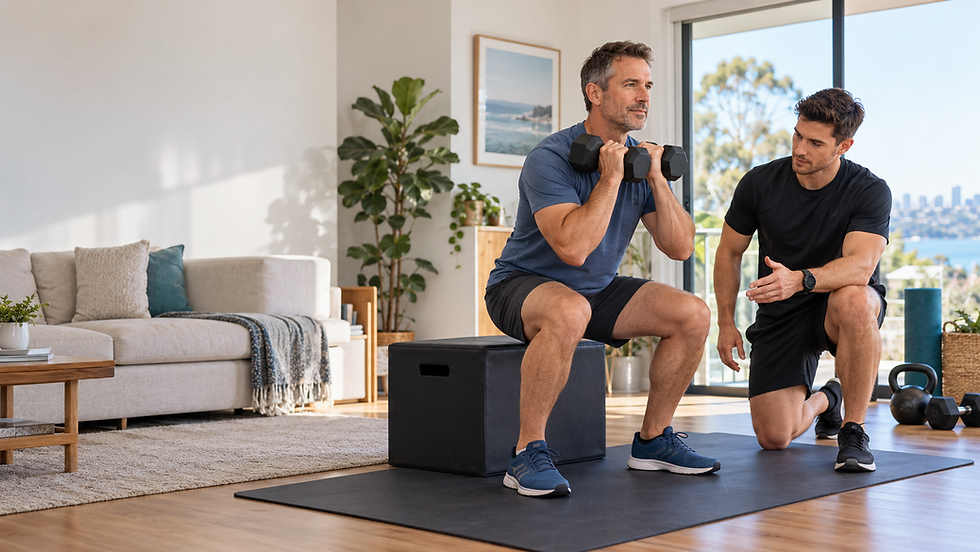
Mobile training can still be useful with limited gear. Bands, dumbbells, kettlebells, bodyweight exercises, steps, and household space can cover a lot of ground. For many people, especially at the beginning, the limiting factor is not equipment. It is having the right plan and sticking with it.
Space and safety
Mobile training needs enough room to move. That does not mean a large home gym. It does mean a clear space, suitable flooring, and a setup that can be used safely.
Gyms are built for training, but they can be busy. Noise, shared equipment, and waiting for stations can affect the flow of a session.
If pain, balance, fatigue, or previous injury is part of the picture, the environment should support control and confidence.
Cost and value
Pricing varies across both formats. Mobile training may include travel time in the cost. Gym training may involve a gym membership, access fees, or package terms.
Do not compare price alone. Compare what is included, how the coach communicates, whether the approach fits your goals, and whether the service is suitable for your situation.
Accountability
A regular appointment can help with follow-through. For some people, a trainer arriving at home removes excuses. For others, walking into a gym makes the commitment feel stronger.
Accountability works best when it is realistic. It should support progress without pressure, shame, or unrealistic promises.
Evidence behind the choice
Exercise is not a cure-all. It is a practical therapeutic tool and management strategy for many health and fitness goals.
The Australian Government’s physical activity guidelines recommend adults do regular aerobic activity and muscle-strengthening activity on at least two days each week. That supports the value of planned strength work, whether it happens at home or in a gym.
The World Health Organization also states that regular physical activity supports heart health, muscle and bone strength, and mental health. It notes that physical activity can help reduce symptoms of depression and anxiety.
For people living with pain or ongoing health issues, the safest message is simple. Exercise should be matched to the person, progressed sensibly, and reviewed over time. The setting should make that easier, not harder.
Credible public sources include:

For people in Sydney, the decision often comes down to travel and time.
Traffic, parking, public transport, school runs, and long workdays can make a gym session harder to keep. In that case, mobile personal training may reduce friction.
By contrast, Sydney also has many well-equipped gyms across suburbs and near business districts. If a gym sits close to home, work, or a regular commute, gym personal training may be the easier routine.
Weather can also play a role. Hot days, wet evenings, and dark winter mornings can affect outdoor or travel-based plans. The best format is the one that still works when conditions are not ideal.
How Evidence Based Motion applies this
Evidence Based Motion does not treat mobile and gym-based coaching as a one-size-fits-all choice. The goal is to find a format that supports your needs, your environment, and your ability to keep training.
Evidence Based Motion begins with an individual consultation and assessment before providing personalised coaching and reviewing progress over time.
That means the setting is part of the discussion, not the whole answer. Exercise is used as a therapeutic tool and management strategy, with coaching matched to the person rather than a fixed template.
FAQs
Is mobile personal training as effective as gym personal training?
It can be, depending on the goal, the coach, the equipment available, and the plan. Some goals need heavier or more varied gym equipment. Other goals can be well supported at home with simple equipment and clear progression.
Is gym personal training better for strength?
Gym training often makes strength training easier because more equipment is available. That can help with heavier loading and exercise variety. Home training can still build strength, especially when the plan matches the person’s current level.
What if I feel uncomfortable training in a gym?
That is common. Mobile training may suit people who want more privacy or less noise. A quieter gym time or a smaller training area may also help. The right choice should lower barriers, not add them.
Can personal training help with pain?
Exercise can be part of pain management, but it should not be sold as a guaranteed cure. If pain is new, severe, worsening, or linked with other symptoms, seek medical advice. A suitable exercise plan should be individual and reviewed over time.
Do I need equipment at home?
Not always. Some sessions can use bodyweight, bands, dumbbells, or basic household space. If specific equipment is useful, that can be discussed before training starts.

Next step
Choose the setting that removes the biggest barrier.
If privacy, travel time, and convenience matter most, mobile personal training may be the better fit. If equipment, atmosphere, and a dedicated training space matter more, gym personal training may suit you better.
For support matched to your situation, start with the Evidence Based Motion Apply page. Apply there and share what you want help with, so the next step can be considered properly.


Comments